
Opportunities to Give Back
Go BIG wants to help!
There are so many ways to give back to leave the places visited better off because you were there, or to leave a better person because of your experience. Often it’s both!
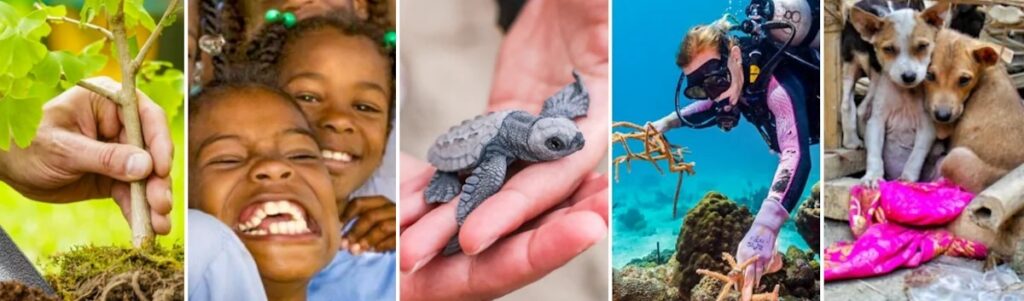
Go BIG has partnered with multiple organizations that protect children, animals, and landscapes. If schedules permit, and pre-approval is granted, micro-volunteering opportunities can be available in certain areas of the tour. The goal for these volunteering opportunities is to allow for Go BIG travelers to be introduced to some incredible organizations that are making a difference for individuals, communities, landscapes, animals, and the world as a whole. The hope is that these opportunities will inspire future engagement with these organizations or similar ones.
Each organization is unique as are the opportunities available to engage with them. Some of the opportunities will allow for seeing completed projects that the organization was involved in, some will allow for meeting of the staff members, others will allow for direct involvement. The specific engagements possible for one tour date may not be available for all tour dates, and we will do our best to provide maximum engagement for those that are interested.
*All of the giving back opportunities are completely optional. Take part in some, all, or none.

Charitable Contributions
Give Stuff or Give Money
Volunteering Opportunities
Give some of your scheduled free time to volunteer. We will organize it and provide transportation for you.
With People
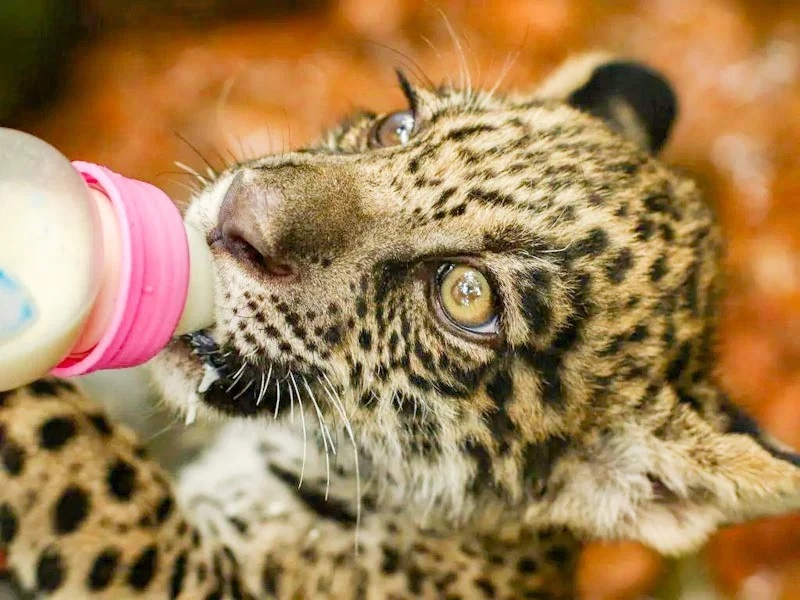
With Animals

Education
Go BIG’s philosophy: Preservation through education and mindful travel. Tourism, when done right, helps people (both traveler and host) appreciate what they have as a resource to be preserved.
Learn
Teach

Empowers Local Stakeholders
- Employs local guides
- Contributes to local businesses
- Supports local charities
- Encourages local preservation projects
- Provides consultation regarding local conservation
Make contribution
For those who wish to participate, Go BIG offers a variety of strictly optional ways to give back – to leave the places visited better off because you were there, or to leave as a better person yourself because of your travel experience. Often it’s both! All volunteering activities are COMPLETELY OPTIONAL and do not affect the tour itineraries.
Contribution

Share your time

Volunteer
w Animals

Volunteer
w People
Spread knowledge

Educate
Yourself

Educate
Others
How We Give
We at GBT feel it is important to try to counterbalance any environmental footprint increases caused by travel-related services – we bypass the current voluntary carbon offsetting marketplace and offset our footprint independently.
Independent Carbon Offsetting
What is a carbon footprint
What is the carbon offset marketplace
What are the components of the marketplace
GBT's current marketplace assessment
What do we do instead of the marketplace?
Give BIG Organization
Mission
To nurture community pride in the areas’ unique ecosystems bolstered by community outreach initiatives that are grounded in environmental understanding based on research and education.
Vision
A community of foreign and domestic members that strive to balance growth with preservation in stewartship of the environment.
GBT Mobile Outreach
HOW WE REACH OUT
Introduce NGOs
We highlight the innovative projects of partnering NGOS throughout the tours’ tineraries (see organizational descriptions below).
Distribute Donations
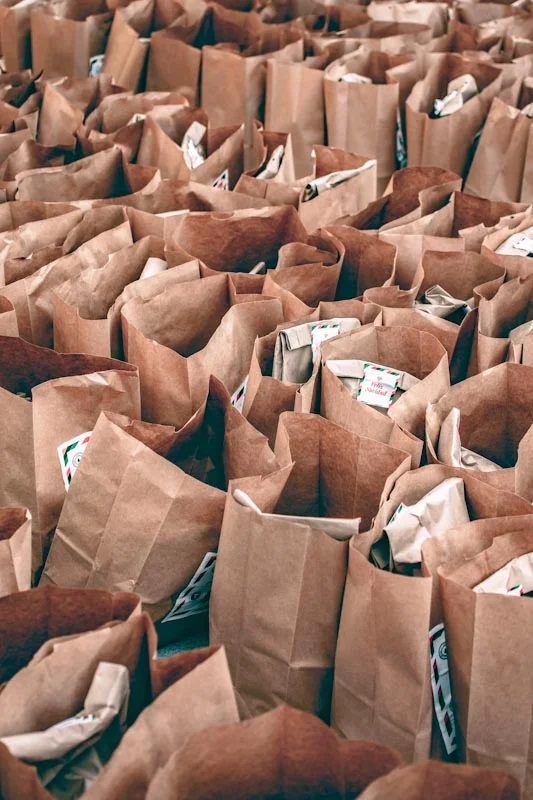
We utilize GBT transportation to deliver donations and requested supplies to in need and often remote communities and organizations we have partnered with.
HOW TO HELP US HELP OTHERS
We utilize GBT transportation to deliver donations and requested supplies to in need and often remote communities and organizations we have partnered with.
Ongoing Needs
- Gas to get us to the locations
- Special-request items
- Donations (including school supplies, clothing, and sporting equipment)
- Wages for shuttle drivers
- Specific project needs (including construction materials)

Goal
Community Outreach Hub

We are currently in the process of establishing a physical presence in the Dominican Republic – a ommunity hub – to magnify our impact.
The hope is that it will serve as a template for similar hubs to be introduced in other countries in which GBT operates.
THREE OPERATIONAL PILLARS
THREE OPERATIONAL PILLARS
Volunteer campus
- Event coordination
- Permaculture projects
- Donation storage
- Administrative office
- Housing and cooking facilities for volunteers (guest) instructors / lectures / researchers / translators / administrators)
- Animal rescue shelter
- Environmental research
- Recreational facilities
- Presentation facilities and equipment
Training
- Mentoring
- Local guide training
- Computer training
- Primary job placement
- Micro-industry introductions (cacao to chocolate, coconut products, craft making)
- Job recruitment
- Small business management training
- Resume assistance
- School entry and scholarship applications assistance
Ongoing Needs
- Language studies
- Basic Sanitation
- Reef restoration
- Marine biology
- Environmental education
- Permaculture
Volunteer campus
- Event coordination
- Permaculture projects
- Donation storage
- Administrative office
- Housing and cooking facilities for volunteers (guest) instructors / lectures / researchers / translators / administrators)
- Animal rescue shelter
- Environmental research
- Recreational facilities
- Presentation facilities and equipment
Training
- Mentoring
- Local guide training
- Computer training
- Primary job placement
- Micro-industry introductions (cacao to chocolate, coconut products, craft making)
- Job recruitment
- Small business management training
- Resume assistance
- School entry and scholarship applications assistance
Ongoing Needs
- Language studies
- Basic Sanitation
- Reef restoration
- Marine biology
- Environmental education
- Permaculture
External Supported Organizations

La Paz
Charitable Donation
Volunteer w People
Educate Yourself
Educate Others
Helping Hands Foundation
Ongoing Needs
We, at the Helping Hands Project Bolivia, have been working with students of limited economic resources from La Paz and its surrounding areas since 2004. We have been supporting them throughout their studies and helping them to take their first steps into the world of work. So far, we have worked alongside more than 300 young people enabling them, with the help of our sponsors and supporters, to realize their dreams of an education and to achieve independence.
OUR HISTORY
Originally focused on teenage boys who were forced to leave the state boys’ home at the age of 18, the Helping Hands Project now works with both girls and boys from orphanages and other social projects around La Paz, Bolivia.
Since 2004, more than 120 students have finished high school with the support of the Project, and more than 250 have finished a program of post-secondary studies.
OUR STUDENTS: A TRULY DIVERSE GROUP
This year in 2023 the Helping Hands Foundation is assisting 91 students, more than half of whom are girls. Some of our students attend high school and the remainder are pursuing a post secondary education. We have young people studying Gastronomy, Nursing, Education, Tourism, Languages, Systems Engineering, Commercial Engineering, Veterinary Medicine, Accounting, Economy, Early Childhood Education, Automobile Mechanics, Law, Medicine, Odontology, Psychology, Graphic Design, Hair Stylist, Social Work and more.
HOW TO HELP
Financially, our students are largely supported through individual sponsorship. This sponsorship is spent in a variety of different ways depending on the individual student’s needs. Generally the funds go toward purchasing school materials, paying for transportation to and from their school, providing rent for a room or paying for school fees. Our sponsors receive regular updates from their students including personal letters, photographs of the students and their grades.
In addition, some of our administrative costs are provided through donations by organizations from the UK, Europe and North America. Their help provides us with the security we need to maintain our office and all the services the office provides for our students, such as the use of computers, homework assistance, showers, and personal guidance.
Our supporters help our students in a variety of areas, easing often stressful financial burdens and allowing them to focus entirely on their studies and future goals. Should illness or injury occur, our students are not alone as we and their sponsors will support them during these difficult and expensive times.
SOS Children's Villages Bolivia
family support and youth training
We are a non-profit, non-governmental, and independent organization working for the rights of children to live in a family. Worldwide, we are the largest organization providing direct childcare.
OUR PROMISE OF CARE Our commitment is to ensure that children all over the world enjoy the quality care they are entitled to. We seek to improve and learn from our experiences, our allies, and from childhood itself.
OUR VALUES
- Commitment We fulfill our promises. Commitment is, above all, engaging with reality to transform it.
- Trust We believe in every person. Trust generates adherence to a project and to the people who make it a reality.
- Boldness We take actions that provoke radical change in children's lives.
- Responsibility We are partners who convey trust. Responsibility expresses a duty and a special sensitivity to respond to the needs of others.

La Paz
Charitable Donation
Volunteer w People
Educate Yourself
Educate Others

Southern Bolivia
Charitable Donation
Volunteer w People
Educate Yourself
Educate Others
Plan International
Promotion of children's rights and girl equality
Our work focuses on supporting children and young people to live free from poverty, violence and injustice. To achieve that, we work with a number of different partners as well as children, young people and their communities.
The rights of children and young people in Bolivia are central to all our work and we strive to be innovative and strengthen intercultural relations across the country.
OUR PRIORITIES INCLUDE
- Early childhood development
- Quality education
- Increasing children’s leadership in society
- Sexual and reproductive health rights
- The prevention of all forms of violence
- The development of knowledge and skills to obtain good jobs
La Senda Verde (LSV)
Wild animal rescue center
Senda Verde was established in 2003 in the subtropical region east side of the Bolivian Andes in South America. Concerned about the urgent need to do something meaningful in favor of the natural world, Vicky and Marcelo decided to take hands-on action. They decided to devote their energy, effort and work to that noble and inspiring task.
OUR MISSION Senda Verde exists to save and shelter animals rescued from illegal trafficking and destruction of habitats and inspire people to value nature. The planet, our only home is under assault like never before. Humans are speeding extinction and altering the Natural World at an “unprecedented pace. Wild animals are innocent victims of cruelty and suffering. Only one out of ten that are taken from their habitat survives.
OUR VISION Guided by a purpose to create a healthier planet, our vision is a world richer in nature where wildlife thrives. The world’s nature and wildlife are facing unprecedented threats. Protecting wildlife is vital for the present as well as future generations. We make every effort to move people to action and play a bigger role in the future.

Rurrenabaque
Charitable Donation
Volunteer w People
Educate Yourself

Rurrenabaque
Charitable Donation
Volunteer w People
Educate Yourself
Comunidad Inti Wara Yassi (CIWY)
wild animal rescue and rehabilitation center
Comunidad Inti Wara Yassi (CIWY) is a Bolivian non-governmental organisation dedicated to the rescue, rehabilitation and care of wildlife that has fallen victim to illegal trafficking and other harm.
As Bolivia’s leading organisation in the fight for animal rights and wildlife care, CIWY works to combat the illegal wildlife trade and the destruction of the environment. We collaborate with the Bolivian authorities to enforce the law, to seize and rescue animals from poachers and merchants, as well as zoos when conditions do not meet legal requirements.
CIWY also rehabilitates wild animals that were injured by fires or other disasters. We conduct educational projects locally and nationally, as well as research projects, and scientific dissemination.
CIWY operates three wildlife sanctuaries distributed throughout Bolivia: Machía, Ambue Ari and Jacj Cuisi. Our sanctuaries are managed by a team of professionals and volunteers from around the world.
Our name reflects the ethnic diversity of Bolivia and our link with nature, by using words from the indigenous languages of the three main ethnic groups in Bolivia. “Inti” means “sun” in Quechua, “Wara” means “star” in Aymara, and “Yassi” means “moon” in Chiriguano-Guaraní. Bringing these languages together symbolises unity.
OUR MISSION CIWY rescues, rehabilitates and cares for wild animals seized from illegal trafficking, and fights to end the animal trade through educational programs, research projects and public actions.Through this work, we aim to inspire humankind to uphold values that promote conservation and the recuperation of biodiversity.
OUR VISION Our vision is a world in which wildlife thrives and lives freely in its natural habitat, free from the dangers of poaching and the destruction of its ecosystems.
OUR OBJECTIVES Our primary objectives are:
- To defend the environment and conserve biodiversity.
- To rescue and rehabilitate wildlife that has fallen victim to trafficking and abuse.
- To responsibly manage and care for rescued wild animals.
- To coordinate and conduct research and education programs that support our conservation efforts.
Hogar "Tata San Juan de Dios"
Orphanage
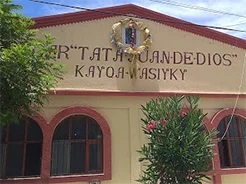
Located in the city of Sucre (Bolivia), the orphanage “Tata Hogar Juan de Dios” was created in 1997 by the nuns of San Antonio de Padua, motivated by love of God and the important needs of Bolivia, especially those children without home and family. The mission of Hogar is to host children from 0 to 5 years, abandoned, orphaned, or abused in order to provide them with the protection of a loving spiritual family.
HISTORY The Argentine order of the San Antonio de Padua nuns, founded in 1889 by Mother Antonia Cerini, has a mission to promote health and education. The community of nuns are gathered for spreading the merciful love of Jesus to the sick, children, the elderly, and the poor in general.
MISSION AND VISION This structure accommodates maximum 45 children, boys and girls aged between 0 and 5 years old, having been placed due to physical or psychological abuse, abandonment, or their parent deaths. The main mission of the orphanage is to welcome all those children who suffer from violence, who are orphaned or abandoned to bring them love and protection in a family spirit. The goal is that their growth is integral: spiritually, emotionally, physically, and intellectually.
This orphanage is also in touch with organizations from Bolivia or from other countries to facilitate the adoption of children before their sixth birthday. It is a structure used primarily for accompaniment of infants and their potential investment family. Thereafter, children over 6 years are sent to other orphanages dedicated especially to children’s learning to become successful adults despite their past.
Sucre
Charitable Donation
Volunteer w People
Educate Yourself
Educate Others
Northern Bolivia
Charitable Donation
Volunteer w Animal
Volunteer w People
Educate Yourself
Educate Others
Armonía
Environmental conservation and education
Armonía means Harmony in Spanish: we strive to create harmony between nature and people.
Founded in 1996, Asociación Armonía quickly became Bolivia’s most effective conservation organization, working with local communities to protect the country’s wildlands and wildlife.
We are a not-for-profit and non-governmental organization with 14 conservation programs across the country that protect Bolivia’s natural heritage while supporting local communities.
OUR MISSION To conserve Bolivia’s birds and their habitats by empowering local people.
Armonía was founded because no organization existed to save Bolivia’s most threatened birds from extinction, while encouraging local people to take action to conserve their natural heritage.
Our greatest success is engaging and empowering local communities and indigenous peoples – from the Andes to the Amazon. We have years of experience coupling environmental protection and raising awareness, with improved livelihoods and living standards for the Bolivian people.
OUR COMMITMENT
- To sustain vital ecological systems and ensure sustainable use of natural resources
- To conserve the sites and habitats important for birds and other biodiversity
- To prevent extinctions in the wild
- To alleviate poverty by creating alternative livelihoods and improved living standards
Bolivia Kids
Child development
Bolivia Kids works in partnership with Bolivian communities to improve the health, education, and well-being of children and youth. Together, we envision a world where all children have the opportunity to realize their full potential. Our goal is to improve the future of children by identifying and harnessing their strengths.
Bolivia Kids aims to tackle the root causes of inequality and collectively nurture each child’s capacity to overcome barriers and realize their potential.
Parents and grandparents also benefit from education programs as well as their active involvement in project governance. Through their participation, they develop a supportive network of relationships that grow their capacity to provide for their children’s developmental needs. Our team of instructors builds capacity in the larger community by providing teacher training and technical support to surrounding elementary schools, promoting child protection and family violence prevention, and working to challenge beliefs and attitudes that foster gender inequality.
Bolivia Kids strives to promote equality, develop sustainable solutions, and create collaborative and inclusive processes, with a particular focus on supporting children to exercise their rights, express their views, and participate actively in their communities. Addressing the current community needs is our immediate focus. However, Bolivia Kids and the children we work with have shared many dreams for the future, including a Canada-Bolivia youth exchange.
WHERE WE WORK
Project Sariry is located in the community of Tilata, just outside of El Alto and La Paz. It is a community on the rural/urban divide, and it is made up of rural migrant families who have come to the city in search of economic opportunities and better quality education and services for their children.
Since 2007, Bolivia Kids has been helping underprivileged children and their families build resilience and transcend poverty through literacy, life skills, and nutrition.
WHAT WE DO
Education Is one of the most powerful means to break the cycle of poverty and positively change a life trajectory. At Project Sariry, children receive enriched learning opportunities and support with their school work so that they reach higher levels of education. The children are actively involved in school governance. They learn their rights and how to advocate for them. Together, we strive to create a safe community hub where children and their families acquire knowledge, experience, and life skills that enable them to realize their full potential and participate as active members of their communities.
Health We work together to ensure the children’s right to a healthy start in life. Each day, children receive a nutritious lunch, snacks, and additional vitamins if needed, to overcome and prevent malnutrition. Twice annually, children receive physical and dental check-ups. Instructors promote a healthy lifestyle to children and their parents, and also provide quality reproductive sexual health education. A key objective at Project Sariry is to ensure that all children have birth certificates so that they can access government services.
Equality Girls face unique barriers due to discrimination that can lead to gender-based violence, limited educational and economic opportunities, and early pregnancy. Gender inequality is a tragedy for individuals, their families, and society as a whole. At Project Sariry, girls are actively involved in all facets of program governance and take on many leadership roles. Instructors actively work with boys, young men, and fathers to champion gender equality.
Protection Household violence has a devastating impact on child development. Witnessing or experiencing violence creates toxic stress which can negatively impact brain development and healthy growth. The instructors at Project Sariry, including an on-site child psychologist, work with children, parents, schools and communities to promote children’s rights and to support children in conflict situations. Children are also threatened in their community by human trafficking, which is a considerable problem in Bolivia. Project Sariry provides a safe environment to learn and play while parents are working.
Leadership Project Sariry provides many opportunities for children to develop their leadership and inform their world view. Children participate in music, theatre, dance, and recreation, including outdoor camping experiences and visits to important cultural and heritage sites. These off-site activities provide wonderful opportunities for children to learn more about the environment, their Aymara cultural values and traditions, and to build confidence and community.
La Paz
Charitable Donation
Volunteer w People
Educate Yourself
Educate Others
Country Wide
Charitable Donation
Volunteer w People
Educate Yourself
Educate Others
Habitat for Humanity
provides housing for the underprivileged
HOW HABITAT ADDRESSES THE NEED
Advocacy
We promote regulatory and/or procedural changes that facilitate access to decent housing through close cooperation with the Housing and Habitat Vice Ministry, and in partnering with civil society organizations and grassroots organizations. We are part of the National Network of Human Settlements, the Popular Habitat Committee, the Coordinator of Canadian Civil Society Organizations in Bolivia, the Consortium of Humanitarian Agencies in Bolivia, and the Habitat International Coalition, among others. We also advocate in the market systems through institutional technical assistance.
Housing Assistance Services
We provide technical assistance for the self-construction of new homes, repairs, improvements, and rehabilitations, according to the needs of each family. We also strengthen peri-urban communities to improve their participation in local planning, access to basic services, and the management of public spaces.
Since 2020, we initiated specific water, sanitation, and hygiene or WASH projects in response to the COVID-19 pandemic and the needs of vulnerable families, so that they can have safe housing with a bathroom, kitchen, laundry area, and access to drinking water.
Considering that the construction sector is vital for post-COVID-19 economic recovery, we trained and supported women construction workers to strengthen their technical skills in plumbing, electricity, and painting, and thus improve their employability.
Fundación Natura Bolivia
Biodiversity conservation
The Natura Bolivia Foundation was established in 2003 with the aim of undertaking biodiversity conservation actions and promoting the sustainable use of natural resources to contribute to improving the quality of life for the Bolivian population. Our main objective is to assist communities in protecting their water sources through forest conservation. We pursue this goal by implementing Reciprocal Agreements for Water (ARA), which, in their execution, consolidate local institutions that carry out activities in favor of conserving water sources in the Tropical Andes of South America. Currently, these agreements involve more than 70 municipalities in Bolivia, Peru, Ecuador, and Colombia, benefiting approximately 200,000 water users who invest in water source conservation. In return for receiving productive alternatives, around 12,000 families conserve approximately 400,000 hectares of forest. All of this has been achieved in partnership with local stakeholders such as municipalities, water cooperatives, private companies, and international cooperation.
We are pioneers in implementing agreements for forest conservation, and we are the first in the world to establish impact assessment mechanisms for such actions to better understand their effectiveness in the realms of conservation and development. This is why we have received various international awards and recognitions.
Rurrenabaque
Charitable Donation
Volunteer w People
Educate Yourself