Daily Itineraries

Tour Day

Day 3

The adventure begins!

We will meet you at the airport and shuttle you through bustling La Paz to your comfortable hotel. Here, you’ll meet fellow adventurers and your friendly tour host. After a brief introduction, your host will take care of travel essentials, including verifying your insurance details and emergency contacts, so you can relax and enjoy the experience ahead.

As the day winds down, prepare for an enchanting start to your adventure with a breathtaking sunset outing. We’ll head to the stunning Killi Killi Overlook, perched high above the city, where you’ll gaze out over the vibrant landscape of Nuestra Señora de La Paz, or “Our Lady of Peace.” Watch in awe as the sun dips behind the majestic peaks that cradle this beautiful city—an unforgettable view to set the tone for the adventure of a lifetime!

Accomodations   

Lodge – shared
group rooms
Included Meals

Activities

AM

Breakfast

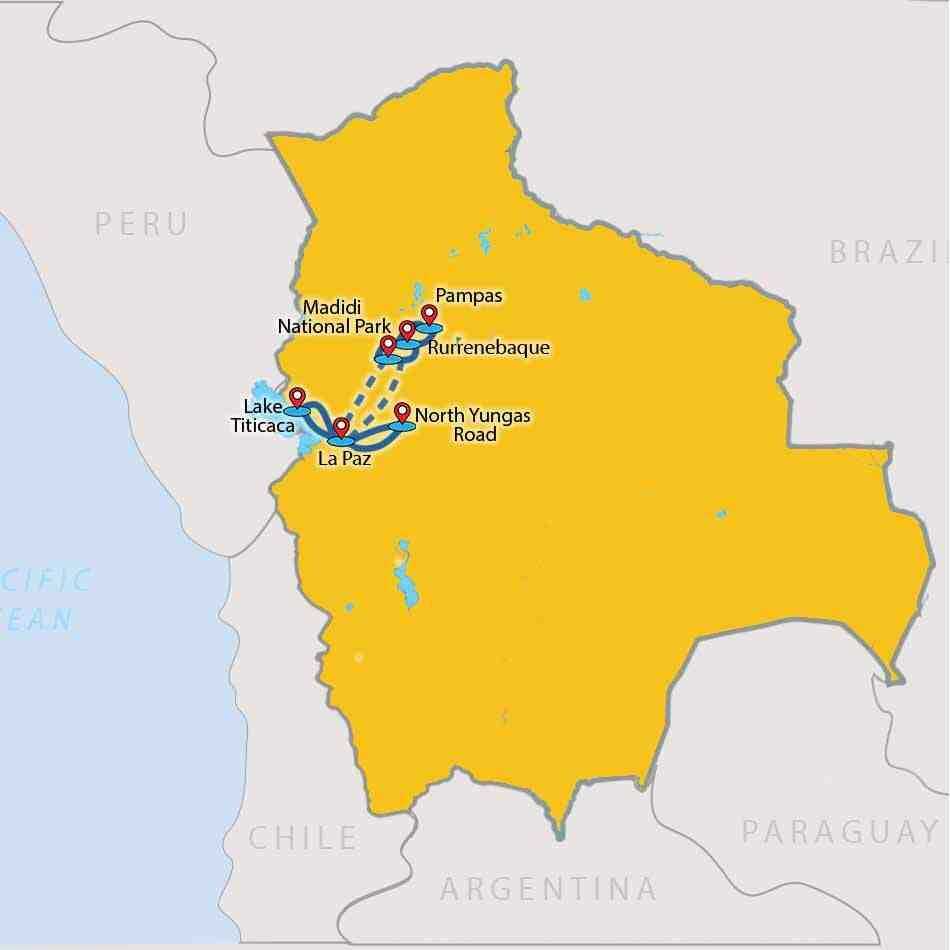
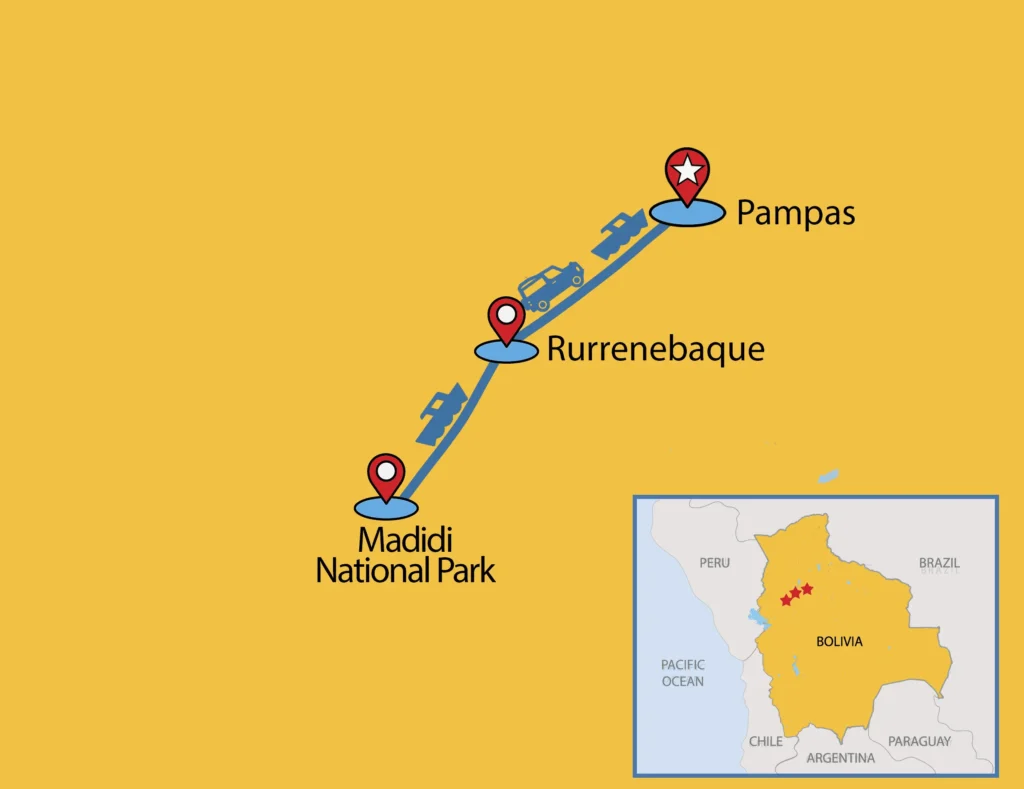
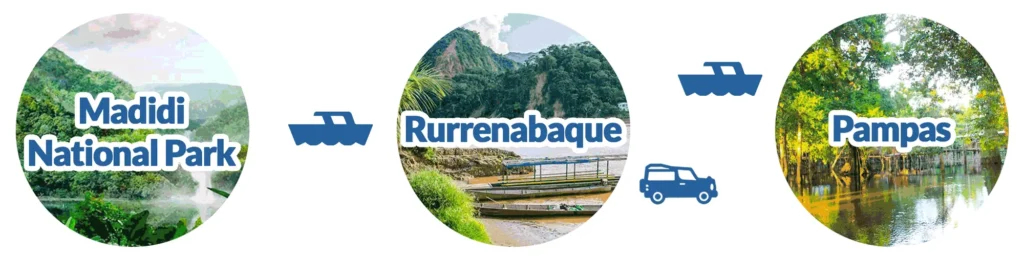
Riverboat to Rurrenabaque (1.5hrs)
Jeep animal tour to Pampas ecolodge
Buffet lunch
 
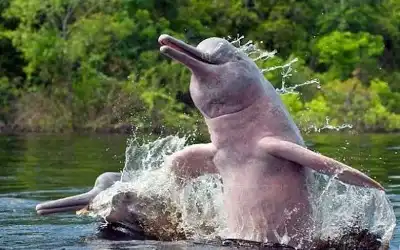
Guided riverboat animal tour and swim with river dolphins (if weather permits and dolphins are located)

PM

Buffet dinner

Possibly Seen

Spectacled Bear

Tremarctos ornatus

Also known as a Mountain Bear, Andean Bear, Jukumari, Ukumari and Ukuku. It is currently classified as vulnerable due to habitat loss.  They typically live at higher elevations, but can be found as low as the Rurrenabaque area.

Brown-throated Three-toed Sloth

Bradypus variegatus

A unique and slow moving mammal that spends most of its time sleeping (15 to 18 hours a day) in the jungle canopy.  The hairs of its fur are adapted to cultivate algaes that have been shown to be anti-parasitic, anti-cancerous and anti-bacterial.

Bolivian River Dolphin

Inia boliviensis

Locally called Bufeos, they are a threatened species but protected by the Bolivian law after being declared national treasures.  The bio-sonar they use to “see” is well suited to navigate the murky river waters and find fish and crabs to feed on.

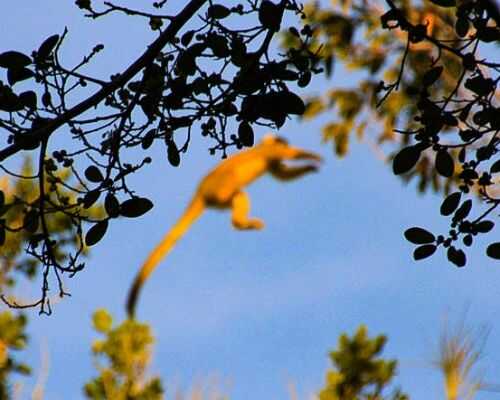
Rio Beni Titi Monkey

Callicebus modestus

A recently discovered species native to the jungles near Rurrenabaque.  They usually live in family groups of 3-7, and the males care for the young.  They mainly eat fruit, but also leaves, insects, bird eggs and small vertebrates.

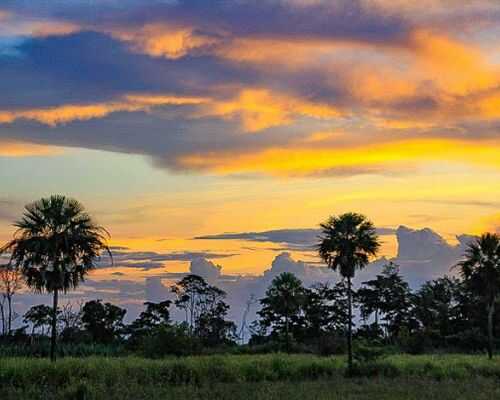
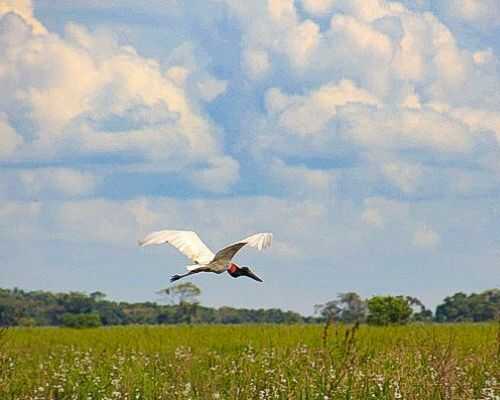
Pampas marsh

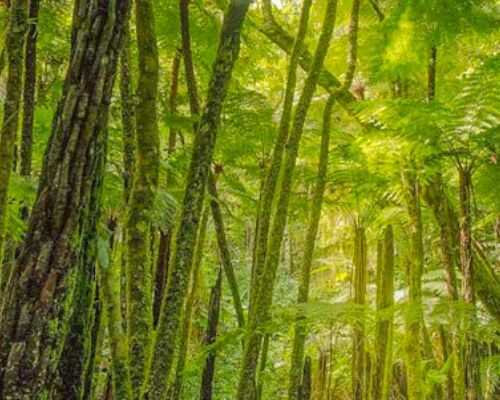
Pampas forest

Pampas forest

Increase the caption length to see how it looks like in 2 lines. 

Pampas forest

Threats to preservation:  deforestation for agriculture and ranching is illegal but often ignored; “wood pirates” who illegally harvest rare hardwoods – mostly the Mara (Bigleaf Mahogany); gold mining, specifically the increased mercury due to the gold separation process; construction of the Apolo-Ixiamas Road through very remote areas over challenging topography, including the construction of a controversial bridge in Rurrenabaque; oil explorationnon-sustainable tourismpoaching for food or illegal trade; two proposed multi-billion dollar mega dams.

Iconic local animals:  Toucans – with various sized bills, mostly eat fruit and use their large bills as a highly efficient thermoregulation system; Anacondas – water boas and world’s heaviest snakes up to 1,100 lb / 500 kg and second longest reaching up to 36 ft / 11m; Caimans (black or spectacled) flourish in slow moving freshwater.  Black is the larger of the two and can be as long as 20 ft/6 m; Jaguars in the Madidi area are the largest in the world – reaching close to 9 ft / 2.7 m and up to 300 lb / 135 kg.  Their biggest threat is poaching for their fangs which are sold in China; Piranhas are omnivores and typically don’t represent a risk to humans.  Their teeth are used as tools by local people for sharpening and carving.

Day 5

Accomodations

Lodge – shared
group rooms
Included Meals
Activities

AM

Breakfast

Riverboat to Rurrenabaque (1.5hrs)
Jeep animal tour to Pampas ecolodge
Buffet lunch
 
Guided riverboat animal tour and swim with river dolphins (if weather permits and dolphins are located)

PM

Buffet dinner
The adventure begins!

We will meet you at the airport and shuttle you through bustling La Paz to your comfortable hotel. Here, you’ll meet fellow adventurers and your friendly tour host. After a brief introduction, your host will take care of travel essentials, including verifying your insurance details and emergency contacts, so you can relax and enjoy the experience ahead.

As the day winds down, prepare for an enchanting start to your adventure with a breathtaking sunset outing. We’ll head to the stunning Killi Killi Overlook, perched high above the city, where you’ll gaze out over the vibrant landscape of Nuestra Señora de La Paz, or “Our Lady of Peace.” Watch in awe as the sun dips behind the majestic peaks that cradle this beautiful city—an unforgettable view to set the tone for the adventure of a lifetime!

Pampas forest
Pampas forest
Increasing the caption length to see how it looks like in 2 lines.
Pampas forest
Pampas marsh

Threats to preservation:  deforestation for agriculture and ranching is illegal but often ignored; “wood pirates” who illegally harvest rare hardwoods – mostly the Mara (Bigleaf Mahogany); gold mining, specifically the increased mercury due to the gold separation process; construction of the Apolo-Ixiamas Road through very remote areas over challenging topography, including the construction of a controversial bridge in Rurrenabaque;

oil exploration; non-sustainable tourism; poaching for food or illegal trade; two proposed multi-billion dollar mega dams. Iconic local animals:  Toucans – with various sized bills, mostly eat fruit and use their large bills as a highly efficient thermoregulation system; Anacondas – water boas and world’s heaviest snakes up to 1,100 lb / 500 kg and second longest reaching up to 36 ft / 11m;

Caimans (black or spectacled) flourish in slow moving freshwater.  Black is the larger of the two and can be as long as 20 ft/6 m; Jaguars in the Madidi area are the largest in the world – reaching close to 9 ft / 2.7 m and up to 300 lb / 135 kg.  Their biggest threat is poaching for their fangs which are sold in China; Piranhas are omnivores and typically don’t represent a risk to humans.  Their teeth are used as tools by local people for sharpening and carving.

Day 7

The adventure begins!

We will meet you at the airport and shuttle you through bustling La Paz to your comfortable hotel. Here, you’ll meet fellow adventurers and your friendly tour host. After a brief introduction, your host will take care of travel essentials, including verifying your insurance details and emergency contacts, so you can relax and enjoy the experience ahead.

As the day winds down, prepare for an enchanting start to your adventure with a breathtaking sunset outing. We’ll head to the stunning Killi Killi Overlook, perched high above the city, where you’ll gaze out over the vibrant landscape of Nuestra Señora de La Paz, or “Our Lady of Peace.” Watch in awe as the sun dips behind the majestic peaks that cradle this beautiful city—an unforgettable view to set the tone for the adventure of a lifetime!

Accomodations

Lodge – shared
group rooms
Included Meals

Activities

Optional Activities

* Time-specific activity

AM

Breakfast

Riverboat to Rurrenabaque (1.5hrs)
Jeep animal tour to Pampas ecolodge
Buffet lunch
 
Guided riverboat animal tour and swim with river dolphins (if weather permits and dolphins are located)

PM

Buffet dinner

Opportunity to give back

Go BIG was founded on the idea of responsible travel and strives to make a positive impact on the places visited.  We try to give travelers the opportunity to give back by introducing them to local organizations in hopes of kindling a relationship that could last a lifetime through sponsorship.  We can often arrange for our travelers to make a real difference in Bolivia by:  getting directly involved with a volunteering project,  albeit a very short one;  sharing their knowledge by giving a talk;  or simply observing how the organizations are helping the communities.  These opportunities are scheduled outside of the standard tour itinerary as additional opportunities for travelers’ free time.

Lorem ipsum dolor sit amet, consectetur adipiscing elit, sed do eiusmod tempor incididunt ut labore et dolore magna aliqua.

Local Opportunity

Go BIG was founded on the idea of responsible travel and strives to make a positive impact on the places visited.  We try to give travelers the opportunity to give back by introducing them to local organizations in hopes of kindling a relationship that could last a lifetime through sponsorship.  We can often arrange for our travelers to make a real difference in Bolivia by:  getting directly involved with a volunteering project,  albeit a very short one;  sharing their knowledge by giving a talk;  or simply observing how the organizations are helping the communities.  

Organizational

  • Helping Hands
  • SOS Children’s Villages
  • Plan International
  • Helping Hands
  • SOS Children’s Villages
  • Plan International
Pampas forest
Pampas forest
Increasing the caption length to see how it looks like in 2 lines.
Pampas forest
Pampas marsh

Threats to preservation:  deforestation for agriculture and ranching is illegal but often ignored; “wood pirates” who illegally harvest rare hardwoods – mostly the Mara (Bigleaf Mahogany); gold mining, specifically the increased mercury due to the gold separation process; construction of the Apolo-Ixiamas Road through very remote areas over challenging topography, including the construction of a controversial bridge in Rurrenabaque; oil explorationnon-sustainable tourismpoaching for food or illegal trade; two proposed multi-billion dollar mega dams.


Iconic local animals:  Toucans – with various sized bills, mostly eat fruit and use their large bills as a highly efficient thermoregulation system; Anacondas – water boas and world’s heaviest snakes up to 1,100 lb / 500 kg and second longest reaching up to 36 ft / 11m; Caimans (black or spectacled) flourish in slow moving freshwater.  Black is the larger of the two and can be as long as 20 ft/6 m; Jaguars in the Madidi area are the largest in the world – reaching close to 9 ft / 2.7 m and up to 300 lb / 135 kg.  Their biggest threat is poaching for their fangs which are sold in China; Piranhas are omnivores and typically don’t represent a risk to humans.  Their teeth are used as tools by local people for sharpening and carving.

Day 10

The adventure begins!

We will meet you at the airport and shuttle you through bustling La Paz to your comfortable hotel. Here, you’ll meet fellow adventurers and your friendly tour host. After a brief introduction, your host will take care of travel essentials, including verifying your insurance details and emergency contacts, so you can relax and enjoy the experience ahead.

As the day winds down, prepare for an enchanting start to your adventure with a breathtaking sunset outing. We’ll head to the stunning Killi Killi Overlook, perched high above the city, where you’ll gaze out over the vibrant landscape of Nuestra Señora de La Paz, or “Our Lady of Peace.” Watch in awe as the sun dips behind the majestic peaks that cradle this beautiful city—an unforgettable view to set the tone for the adventure of a lifetime!

Accomodations

Lodge – shared
group rooms
Included Meals

Activities

Optional Activities

AM

Breakfast

Riverboat to Rurrenabaque (1.5hrs)
Jeep animal tour to Pampas ecolodge
Buffet lunch
 
Guided riverboat animal tour and swim with river dolphins (if weather permits and dolphins are located)

PM

Buffet dinner
Pampas forest
Pampas forest
Increasing the caption length to see how it looks like in 2 lines.
Pampas forest
Pampas marsh

Threats to preservation:  deforestation for agriculture and ranching is illegal but often ignored; “wood pirates” who illegally harvest rare hardwoods – mostly the Mara (Bigleaf Mahogany); gold mining, specifically the increased mercury due to the gold separation process; construction of the Apolo-Ixiamas Road through very remote areas over challenging topography, including the construction of a controversial bridge in Rurrenabaque; oil explorationnon-sustainable tourismpoaching for food or illegal trade; two proposed multi-billion dollar mega dams.


Iconic local animals:  Toucans – with various sized bills, mostly eat fruit and use their large bills as a highly efficient thermoregulation system; Anacondas – water boas and world’s heaviest snakes up to 1,100 lb / 500 kg and second longest reaching up to 36 ft / 11m; Caimans (black or spectacled) flourish in slow moving freshwater.  Black is the larger of the two and can be as long as 20 ft/6 m; Jaguars in the Madidi area are the largest in the world – reaching close to 9 ft / 2.7 m and up to 300 lb / 135 kg.  Their biggest threat is poaching for their fangs which are sold in China; Piranhas are omnivores and typically don’t represent a risk to humans.  Their teeth are used as tools by local people for sharpening and carving.