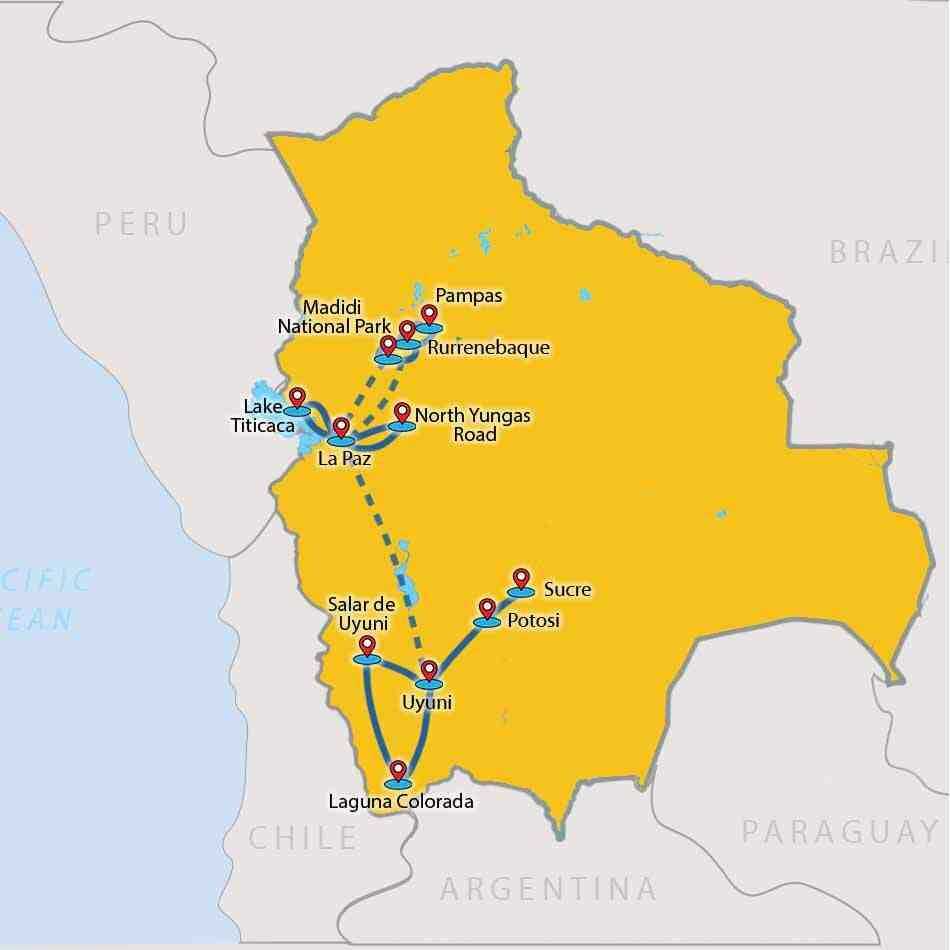
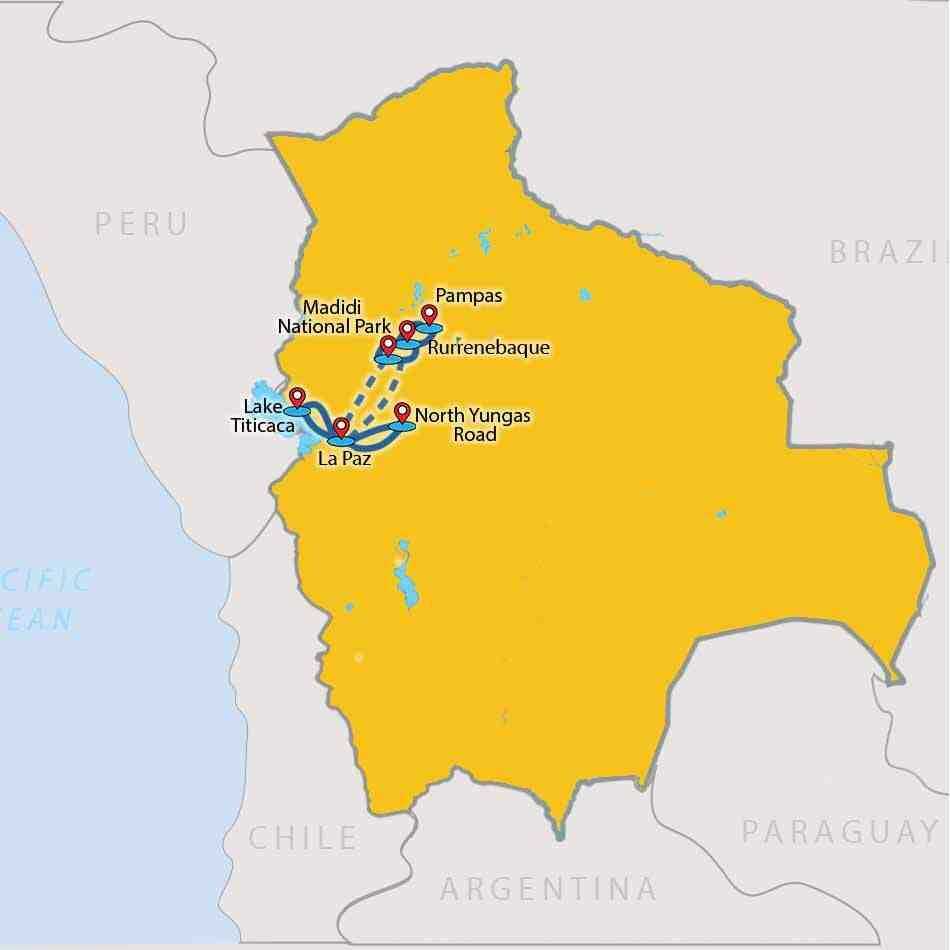
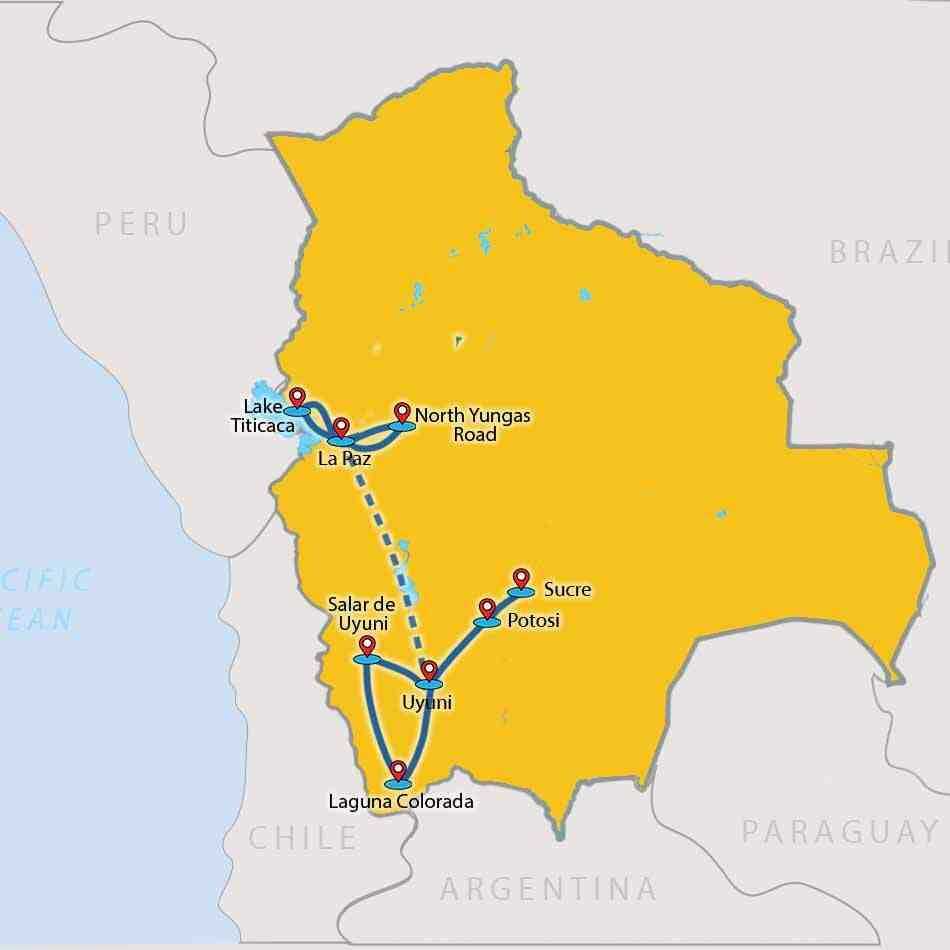
What to expect: Days are full and often starting early and continuing until evening. Days can have many hours in touring vans or long periods of standing and/or walking. Walking can be difficult at times: over uneven terrain, up hills, and stairs (often without handrails). Many of the accommodations do not have elevators.
Appropriate for: Travelers who are physically fit and comfortable with long days of travel and walking.
Altitude sickness can occur at altitudes 8,000 ft or above. Anyone can develop altitude sickness no matter how fit, healthy or young. All travellers should research altitude sickness, so as to be aware of the symptoms and consult their physicians with any concerns they may have.
Bolivia has incredibly diverse landscapes and tourism is low compared to many other South American countries (albeit increasing quickly). Because of this, many of the amenities associated with more well-trodden locations are not available. So, it is hard to visit Bolivia without feeling like an explorer!
You should approach the tour with a flexible mindset. Due to the aforementioned lack of many amenities, travel can be difficult at times. Roads are not in the best condition (usually dirt except for the largest cities) and detours are common due to landslides and flooding. Roads can also be closed for many hours due to protests that are not rare occurrences. Flights, especially to Rurrenabaque, are often delayed or canceled, and the itinerary is structured to allow for flexibility, but that might require changing the intended route and modifying the destinations visited. Attractions can be closed without warning and for no apparent reason. Go BIG has a network of friends in the industry throughout Bolivia and therefore many options and experience navigating the area. Most tours will go according to the itinerary, but you should approach the tour with the idea that you are on an adventure and potential last minute changes are part of that adventure!
We pride ourselves on trying to maximize the comfort for travelers. When possible we get far larger vans than required to allow more space for spreading out. Transportation on the tour is varied to say the least! From planes to jeeps, moto rized canoes, log rafts, mountain bikes, taxis and tour vans. For the overlanding in Salar de Uyuni, Atacama and the Pampas, we try to put a maximum of four travelers plus the driver where most other companies will pack one or even two more people in each vehicle. The vehicles are usually Toyota Land Cruisers, chosen for their durability. They are rarely newer than 10 years old and often show their wear. The boats in the rainforest and Pampas are made for utility and not comfort. Boat rides are usually fairly short (usually less than 1.5 hours) and provide little protection from the elements. So when it rains, you are likely going to get wet and some wetness can be expected on the sunniest of days. The planes are small jets and prop planes and are on par with most economy airlines.
“Private” transportation includes ticketed transportation such as for buses and trains.